
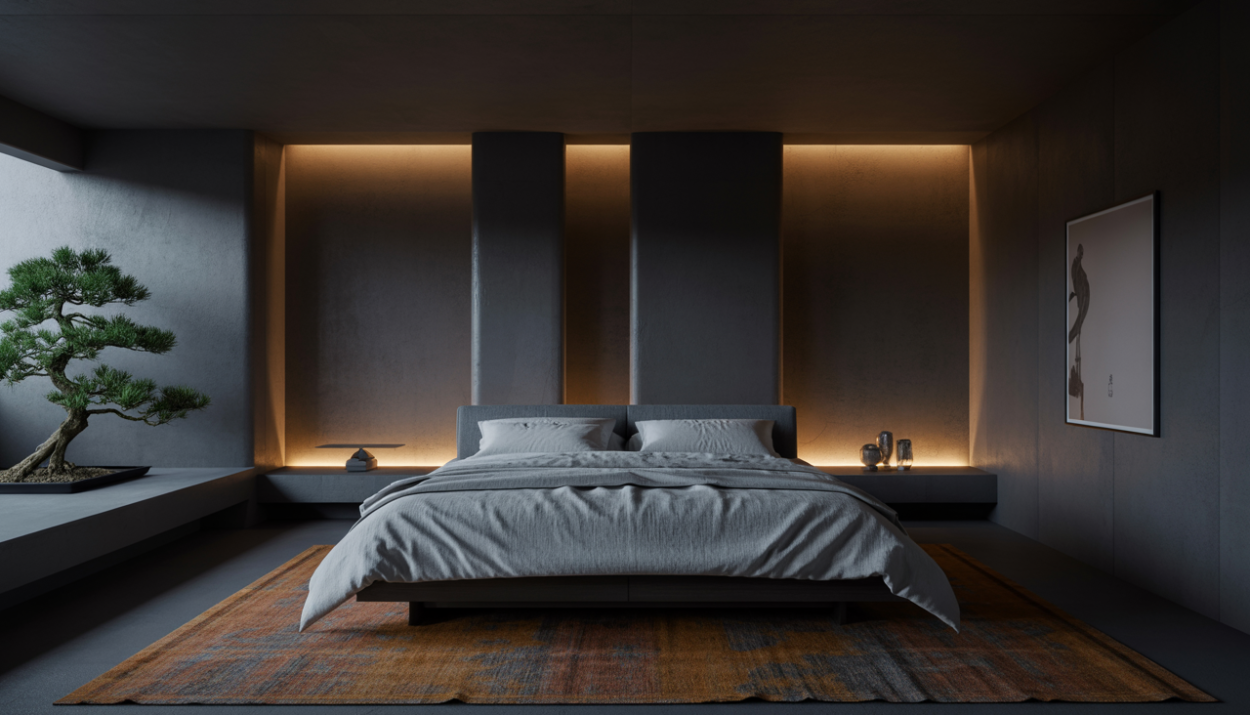

Minimalist Japanese bedroom design goes beyond visual simplicity. It’s about creating a space that feels calm, intentional, and emotionally grounding. Rooted in Japanese philosophy, this style values balance, natural materials, and the quiet beauty of restraint rather than excess. One concept that perfectly captures this atmosphere is Yūgen, a Japanese aesthetic idea that describes subtle depth and beauty that is felt rather than seen.
In a minimalist Japanese bedroom, Yūgen shows up through soft shadows, muted colors, and thoughtfully chosen elements that leave room for stillness. Low beds, organic textiles, and indirect lighting help slow the pace of the space, making the bedroom feel more like a sanctuary than a showcase. Instead of filling the room with decor, every object has purpose and meaning.
This approach works especially well for modern homes and small spaces, where simplicity enhances comfort. Whether you prefer light and airy interiors or darker, moodier tones, the principles of minimalist Japanese design can be adapted to create a bedroom that supports rest, focus, and quiet reflection.
Minimalist Japanese bedroom ideas inspired by Yūgen aesthetics, featuring low beds, natural materials, soft lighting, and calm modern design.
In this article:
- Minimalist Japanese Bedroom with Modern Depth
- Minimalist Japanese Bedroom with Natural Stillness
- Minimalist Japanese Bedroom Framed by Nature
- Dark Minimalist Japanese Bedroom Design
- Traditional Minimalist Japanese Bedroom with Tatami
MINIMALIST JAPANESE BEDROOM WITH MODERN DEPTH
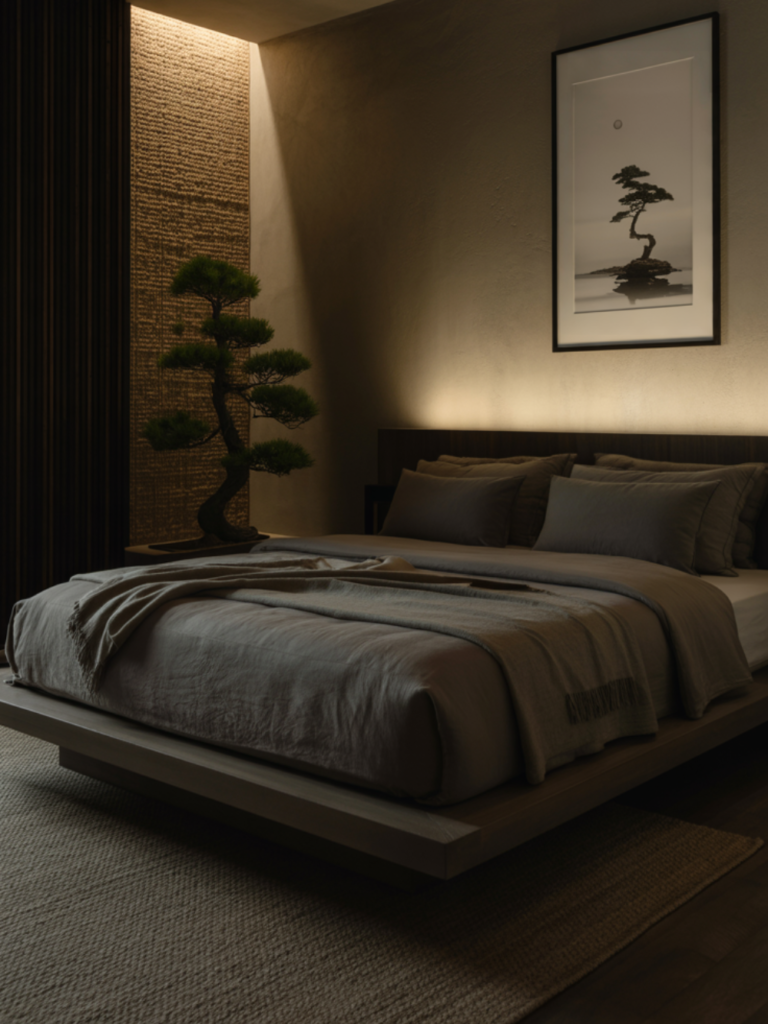
A minimalist Japanese bedroom doesn’t have to feel traditional to feel authentic. This Yūgen-inspired space shows how modern materials like concrete and recessed lighting can still express calm, restraint, and emotional depth. The key lies in balance. Cool surfaces are softened by natural textures, subtle lighting, and carefully chosen organic elements.
Low-profile beds are central to Japanese interiors because they visually ground the room and encourage a slower, more intentional lifestyle. In this setting, the bed becomes part of the architecture rather than a dominant object. The bonsai tree is not a decoration for decoration’s sake. It introduces a living focal point that reinforces mindfulness and connection to nature.
Lighting plays a major role in minimalist Japanese bedrooms. Instead of bright overhead lights, layered ambient lighting creates shadows and contrast, allowing the room to feel intimate and contemplative. This approach works especially well in modern apartments or small spaces where simplicity prevents visual overload.
This style is ideal if you want a bedroom that feels calm but not sterile – modern, yet deeply atmospheric.
MINIMALIST JAPANESE BEDROOM WITH NATURAL STILLNESS
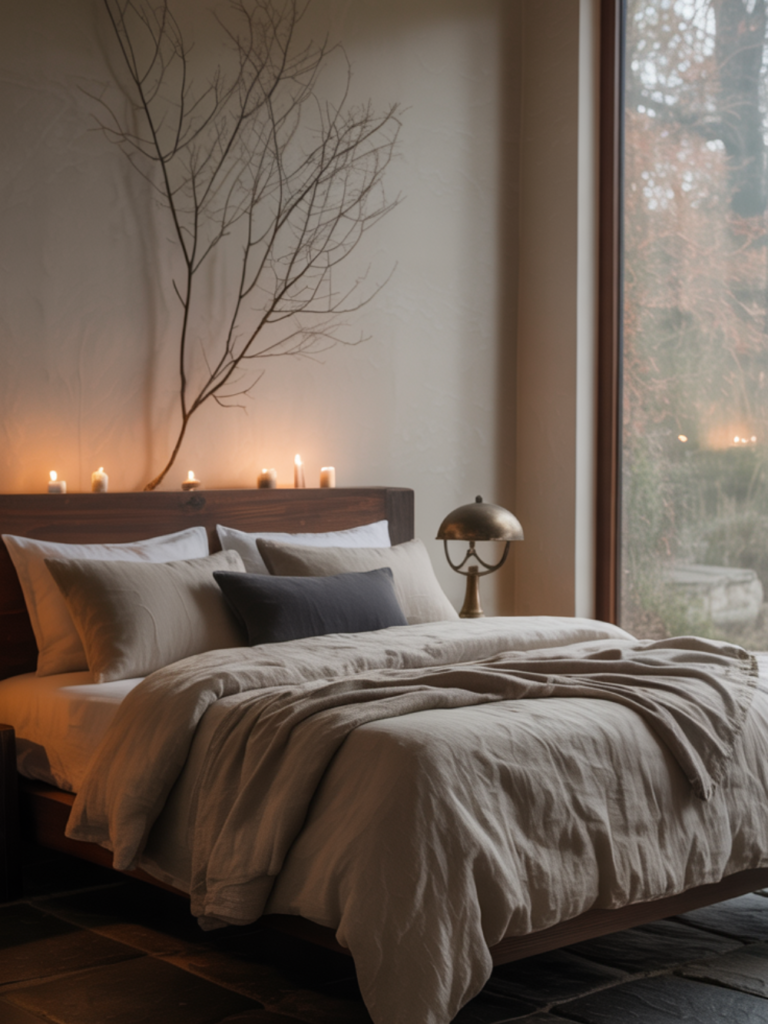
A minimalist Japanese bedroom often draws its power from what’s left unsaid. This space embraces emptiness, muted colors, and gentle textures to create a feeling of quiet presence. The restrained color palette of beige, gray, and charcoal allows the mind to rest, making the bedroom feel like a retreat rather than a display.
Natural materials are essential in Japanese interior design. Linen bedding, raw wood furniture, and stone floors age beautifully over time, aligning with wabi-sabi principles. Instead of filling walls with artwork, a single organic element, like the branch silhouette, becomes meaningful through its simplicity.
This approach works especially well in small bedrooms, where fewer elements create a stronger emotional impact.
MINIMALIST JAPANESE BEDROOM FRAMED BY NATURE
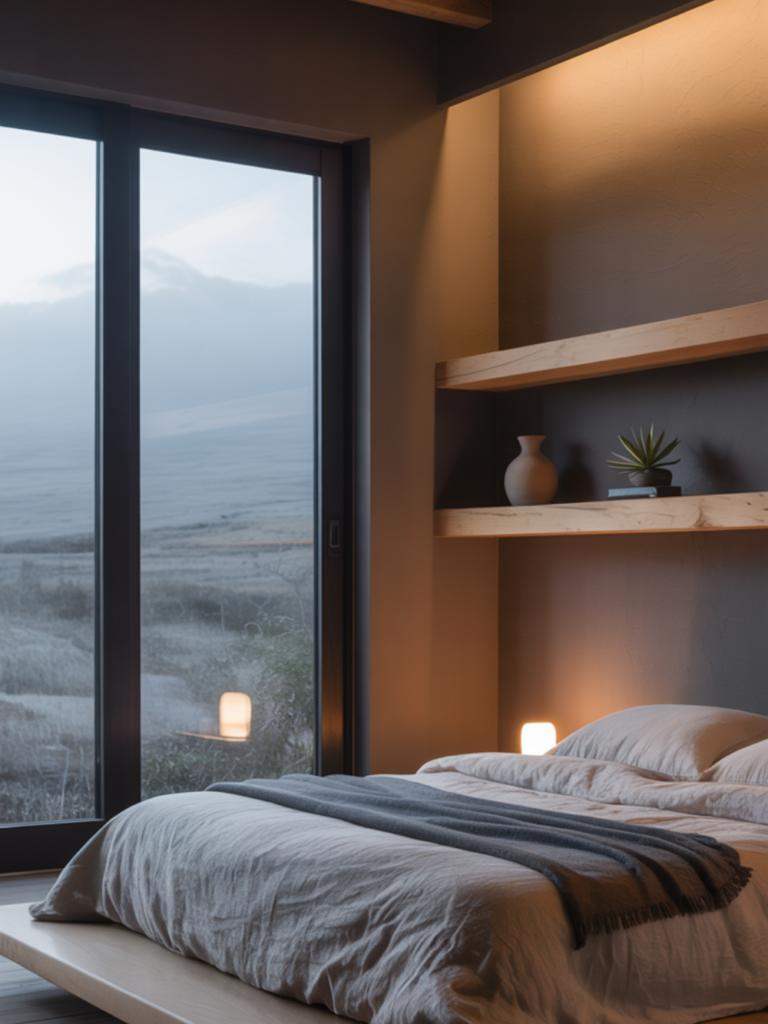
A minimalist Japanese bedroom is often designed as a frame for nature rather than a separate interior world. Floor-to-ceiling windows turn the outside landscape into a living artwork, reducing the need for decoration inside the room.
The low wooden platform bed keeps sightlines open and emphasizes horizontal space, which makes rooms feel larger and more grounded. Neutral bedding in soft grays adds texture without competing with the view, while a single folded throw introduces quiet contrast.
Floating shelves are a practical yet minimal solution for storage and display. By limiting objects to just one or two pieces, the room avoids visual noise and maintains a sense of order. Every item has a purpose, whether functional or symbolic.
Warm, diffused lighting prevents the space from feeling cold, especially in rooms with darker walls. This design is ideal for those seeking a modern minimalist bedroom that still feels emotional and poetic.
DARK MINIMALIST JAPANESE BEDROOM DESIGN
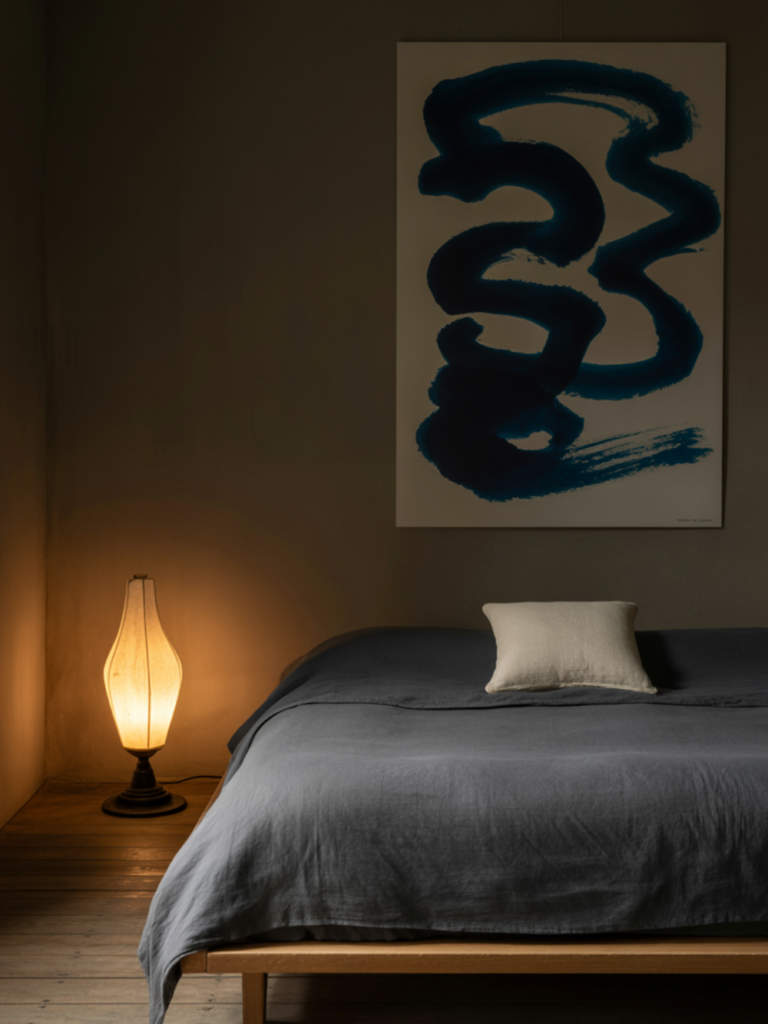
Dark tones can be incredibly calming when used intentionally. This minimalist Japanese bedroom shows how charcoal, indigo, and aged wood create a cocoon-like atmosphere without feeling heavy or oppressive.
Instead of filling the room with furniture, the design focuses on texture and light. Worn floorboards and linen bedding add depth through touch rather than color. The single antique lamp becomes both a light source and a sculptural element, reinforcing the idea that one strong focal point is enough.
Japanese minimalist interiors often embrace shadows as part of the design. Darkness allows the mind to slow down, making the bedroom feel more restorative. This approach works particularly well for people who want a sleep-focused space free from distractions.
If you’re drawn to moody interiors but still value simplicity, this style offers the best of both worlds.
TRADITIONAL MINIMALIST JAPANESE BEDROOM WITH TATAMI
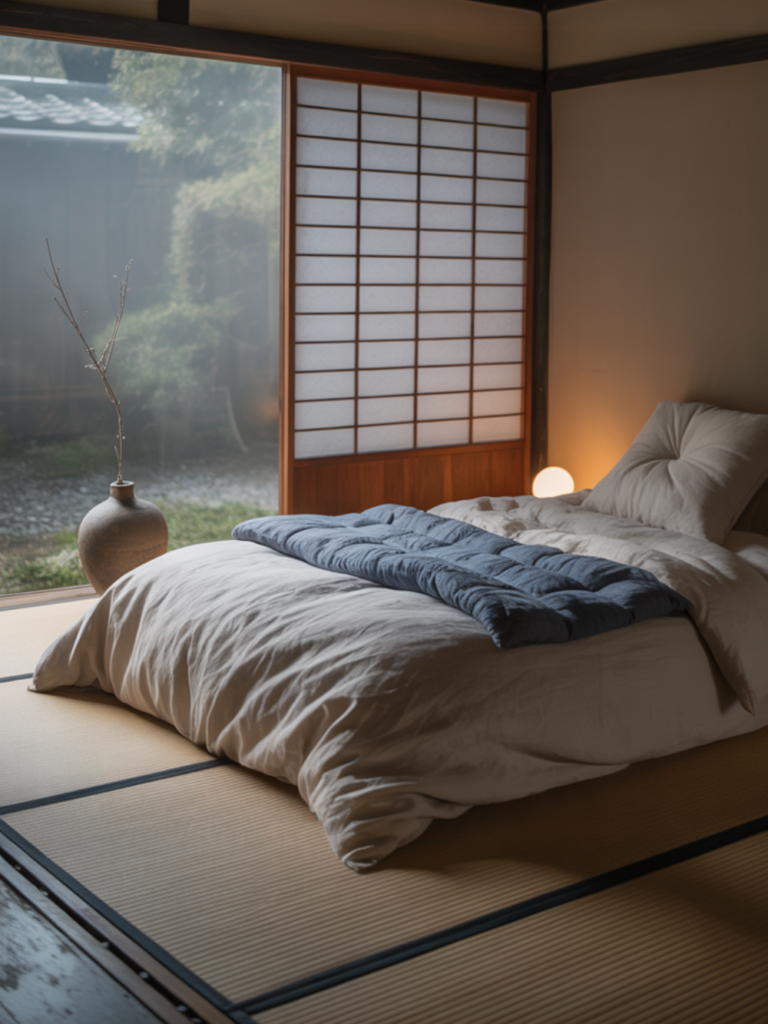
A minimalist Japanese bedroom rooted in tradition prioritizes harmony, function, and natural flow. Tatami flooring defines the space, offering both comfort and visual structure, while shoji screens soften light and create a sense of privacy without heaviness.
The low futon bed reinforces a close relationship with the floor, encouraging grounding and better spatial awareness. Natural linen bedding keeps the look effortless and breathable, ideal for a calm sleep environment.
Decor is intentionally sparse. Soft, indirect lighting enhances the textures of natural materials rather than overpowering them. This style is especially suited for those seeking a simple, soulful bedroom that feels timeless and deeply calming.
_____
Minimalist Japanese bedroom design offers more than a clean aesthetic. It creates an environment that supports mental clarity and deep rest. By focusing on simplicity, natural materials, and intentional use of space, this style encourages a slower, more mindful way of living. Concepts like Yūgen remind us that beauty doesn’t need to be loud or obvious to be powerful.
Through low-profile beds, soft lighting, and restrained decor, a minimalist Japanese bedroom becomes a place to unwind without distraction. The absence of clutter allows textures, light, and atmosphere to take center stage, making the room feel both calming and deeply personal.
Whether inspired by modern interpretations or traditional elements like tatami and shoji screens, this design philosophy adapts easily to different homes. By embracing less and choosing thoughtfully, you can create a bedroom that feels timeless, balanced, and quietly meaningful.
✨ For more inspiring interiors, visit our Home Decor category.